
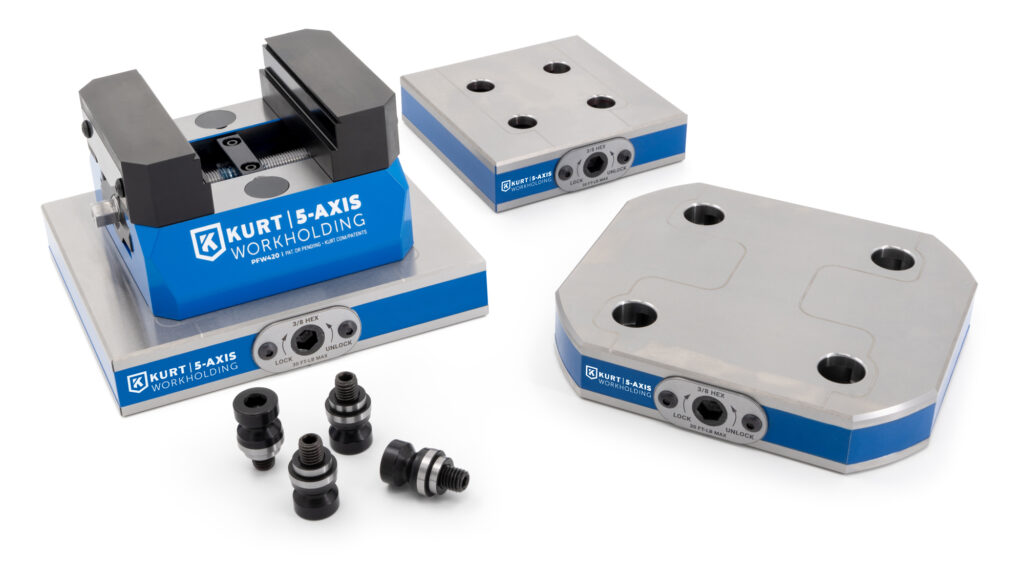
Modern CNC machining increasingly relies on 4- and 5-axis equipment to produce complex parts efficiently and accurately. Choosing the right multi-axis vise setup is essential for reducing setups, improving tool access, and maintaining consistent part positioning throughout the machining process.
Unlike traditional vises, multi-axis workholding systems are designed to support done-in-one machining, modular fixturing, and automation. In this guide, we explain how to select the right multi-axis vise setup and highlight proven solutions from Kurt Workholding, including the PF420 and PFW420 5-Axis Vises, and Kurt’s quick-change zero-point base systems.
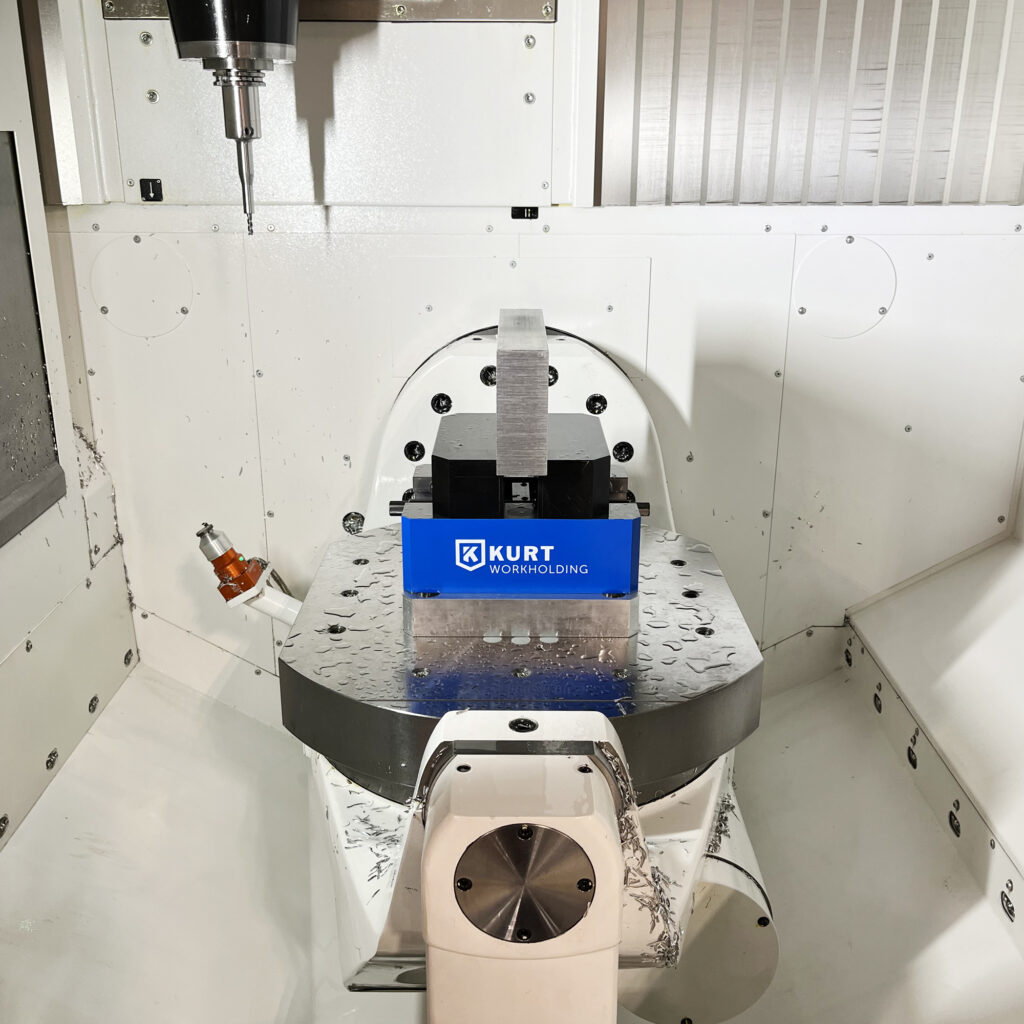
What Is a Multi-Axis Vise Setup?
A multi-axis vise setup is a workholding configuration engineered to allow access to multiple faces of a part during a single machining cycle. These setups are commonly used on 3-, 4-, and 5-axis CNC machines and typically include:
- Compact 5-axis vises for increased tool clearance
- Modular, quick-change receiver bases for repeatable changeovers
- Pull stud vise attachment systems to maximize compatibility
- Automation-ready, scalable systems
The result is fewer setups, reduced cycle times, and improved machining accuracy.
1. Match the Vise Setup to your Machine
Before selecting a vise and mounting system, verify your machine’s workholding requirements. These dictate the mounting pattern, spacing, and base compatibility of the vise and receiver base you choose. Kurt Workholding offers solutions designed around common industry mounting standards with receiver bases that can be mounted on a wide range of machine tables from 5-axis platters to T-slot tables in 3- and 4-axis CNC machines.
96 mm Zero-Point Receivers
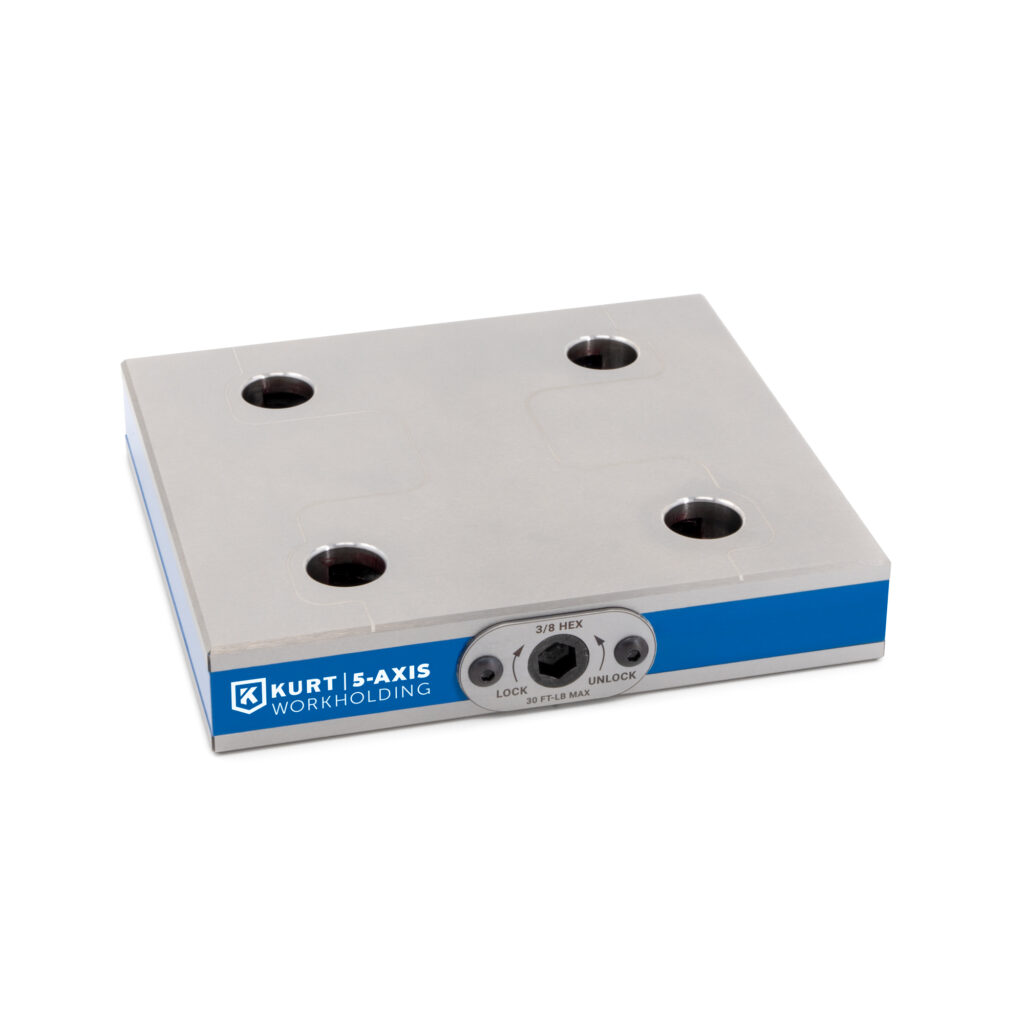
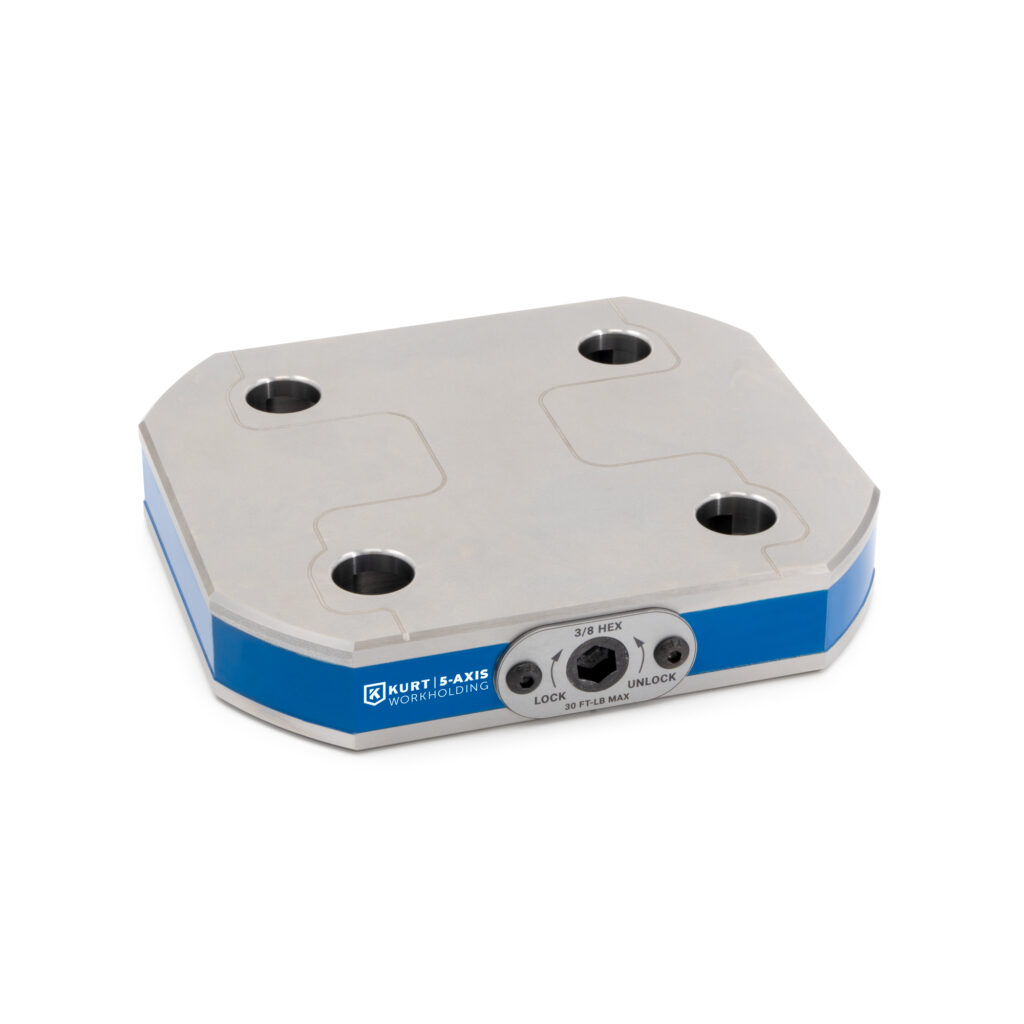
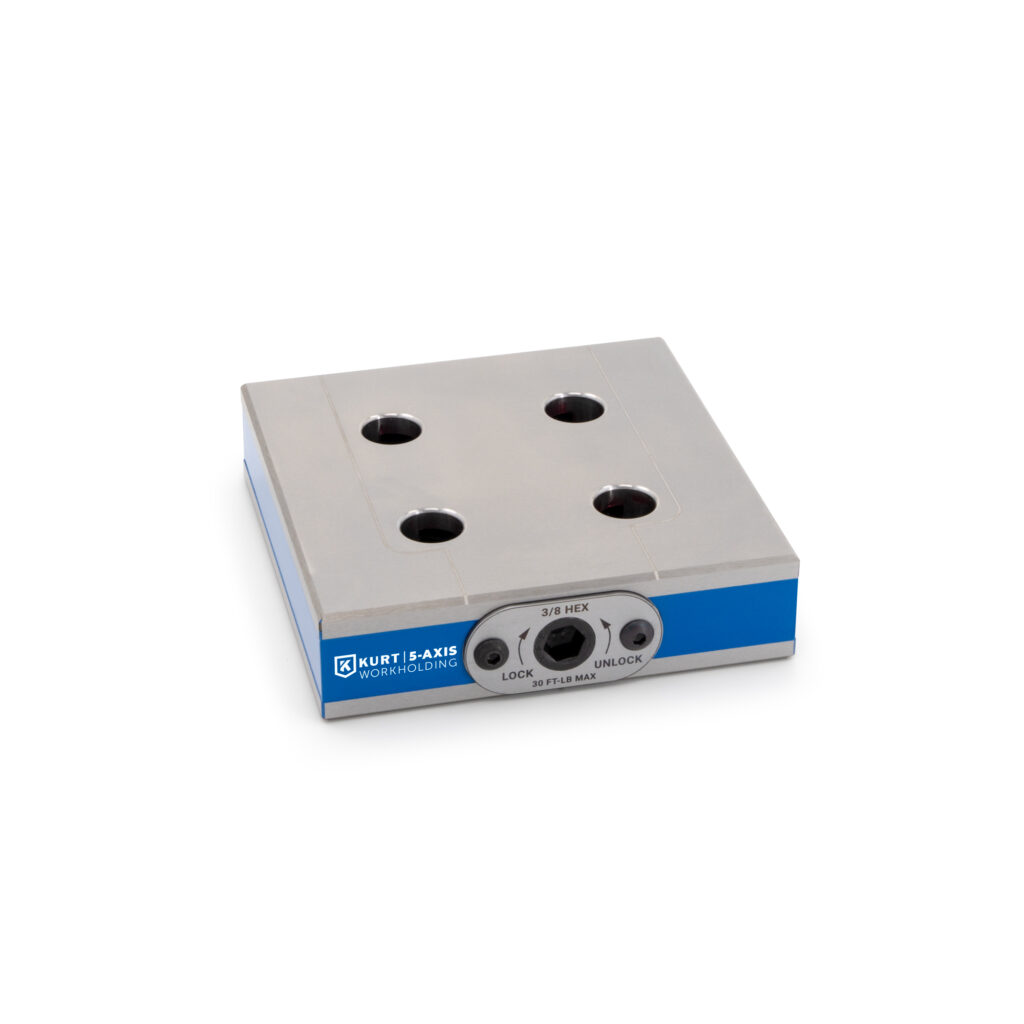
For a 96 mm pull-stud spacing system, Kurt PFW 5-Axis Vises pair with the Kurt Quick Change 178 mm Bases (96-A178) or with the Kurt Quick Change 178 mm Radius Base (96-A178R100). This combination delivers rigid clamping, precise repeatability, and fast changeovers for high-mix machining environments.
52 mm Zero-Point Receivers
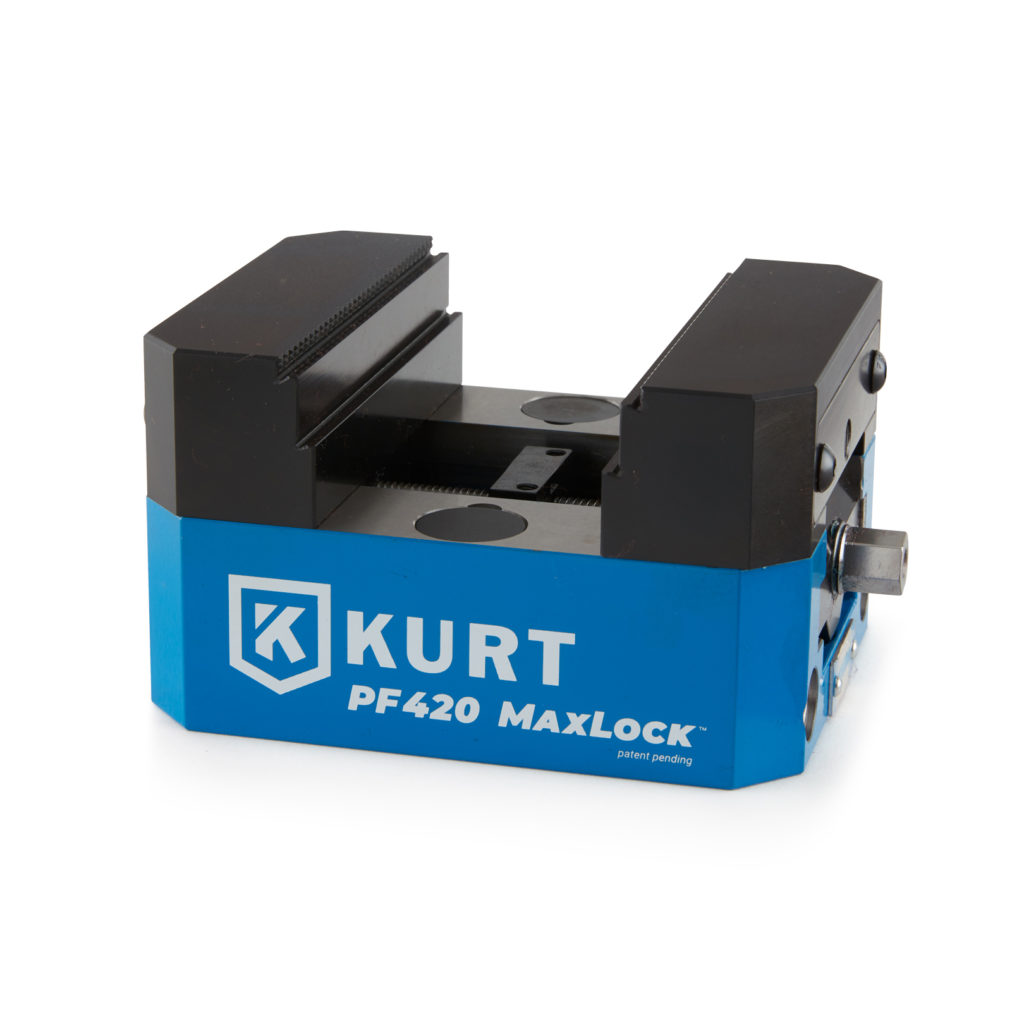
For a 52 mm system, match the Kurt PF420 Series of 5-Axis Vises with the Kurt Quick Change 125 mm Base (52-A125). This setup provides the same modular benefits in a more compact footprint, ideal for smaller machines or dense fixture layouts.
Modular quick-change bases ensure reliable mounting and allows multiple vises to be transferred in and out of the machine without re-indicating.
2. Choose the Right 5-Axis Vise for Your Application

Kurt PFW Series 5-Axis Vises (96 mm Spacing)
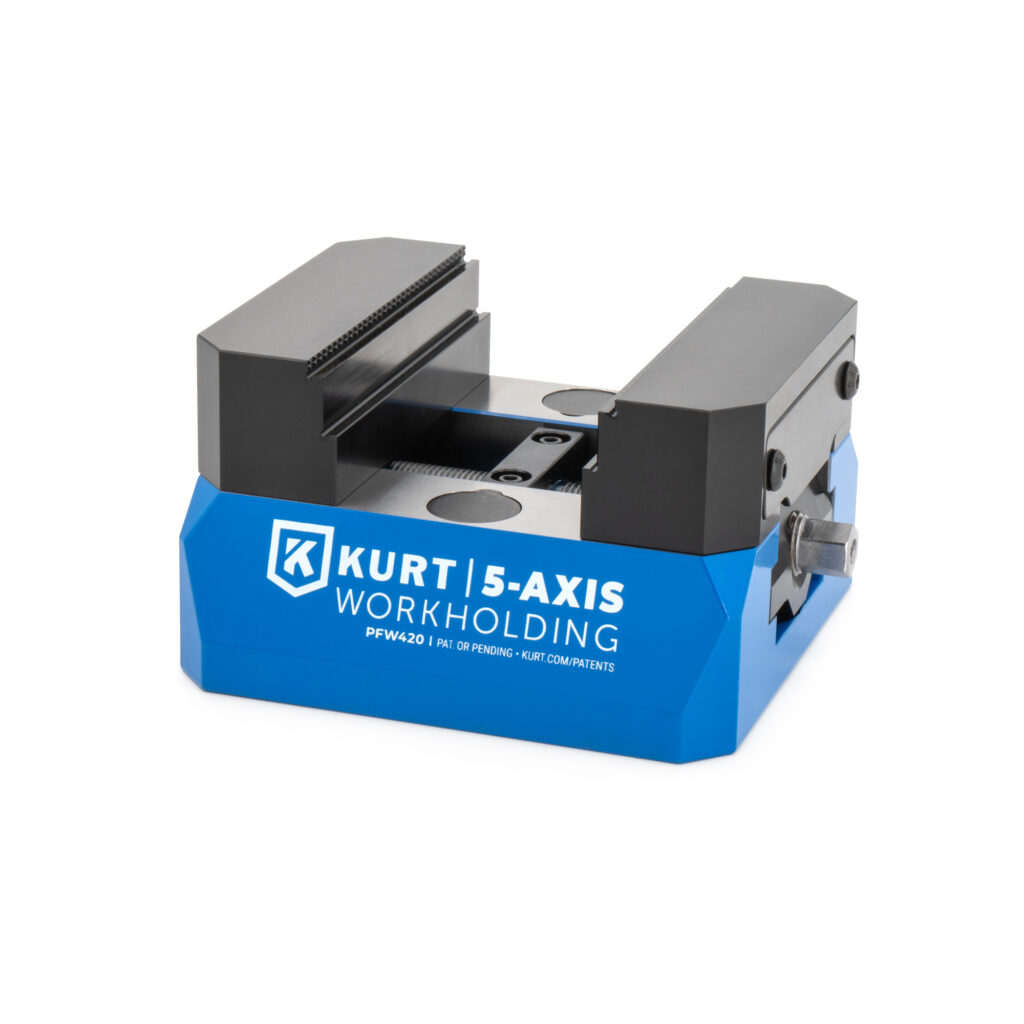
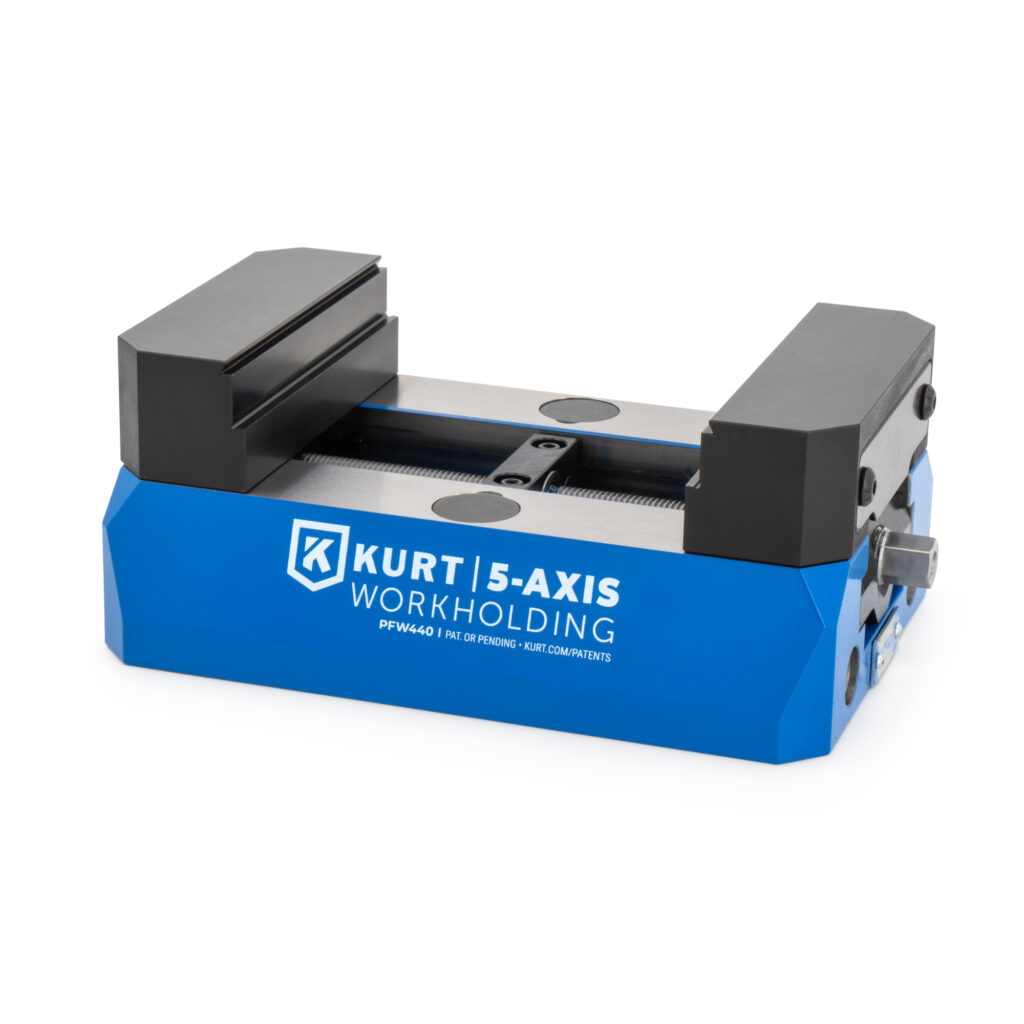
The PFW420, PFW440, and PFW460 vise models are designed for demanding multi-axis machining applications where rigidity, accessibility, and repeatability are critical. Available in 3 sizes with snap on/off quick change 4-inch jaws and 96 mm pull-stud spacing, these models are the go to for precision, self-centering clamping in the widest range of machines.
Key benefits include:
- AngLock® clamping mechanism to minimize jaw lift
- Quick-lash adjustment for fast centering and consistent setups
- Interchangeable jaw styles, including serrated, dovetail, and machinable jaws
- Compact body design to maximize tool access in multi-axis machining
This vise is well suited for aerospace, automation cells, and high-precision production environments.
Kurt PF Series 5-Axis Vises (52 mm Spacing)
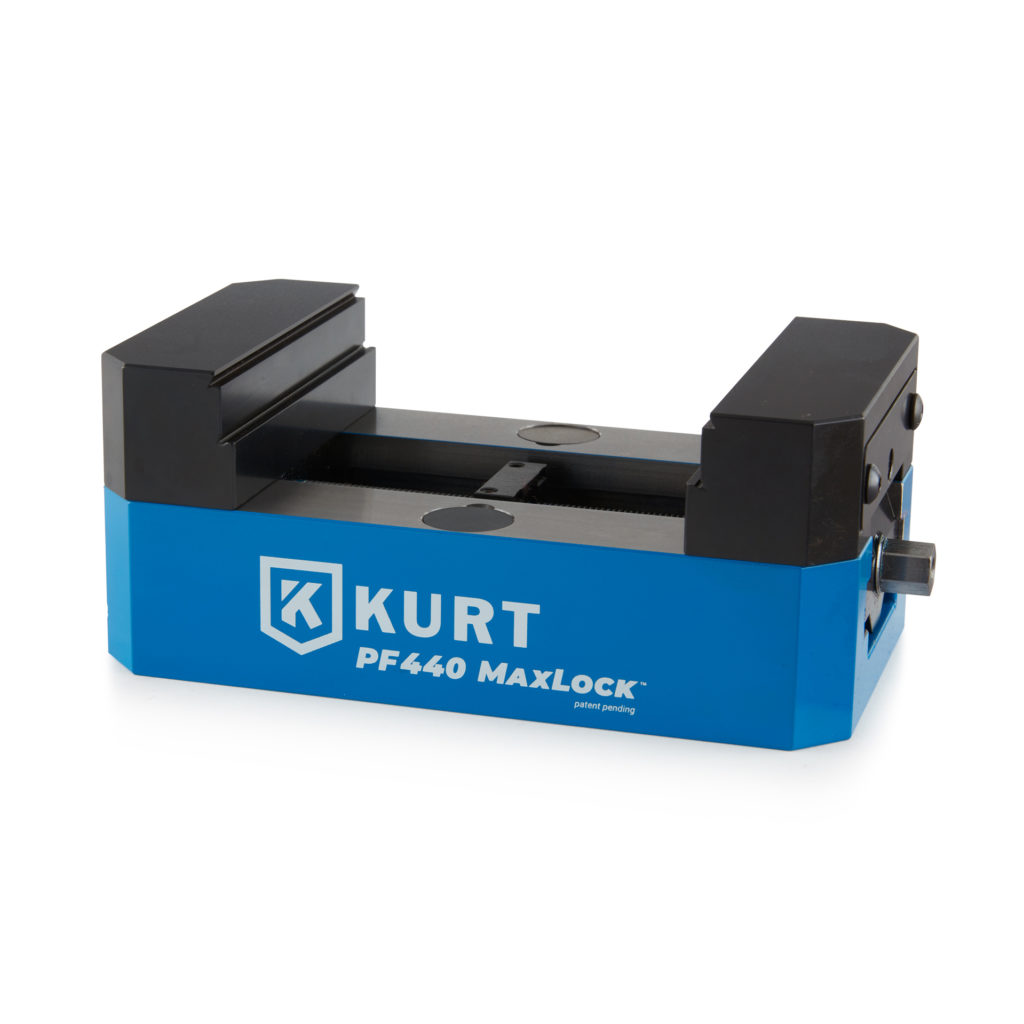
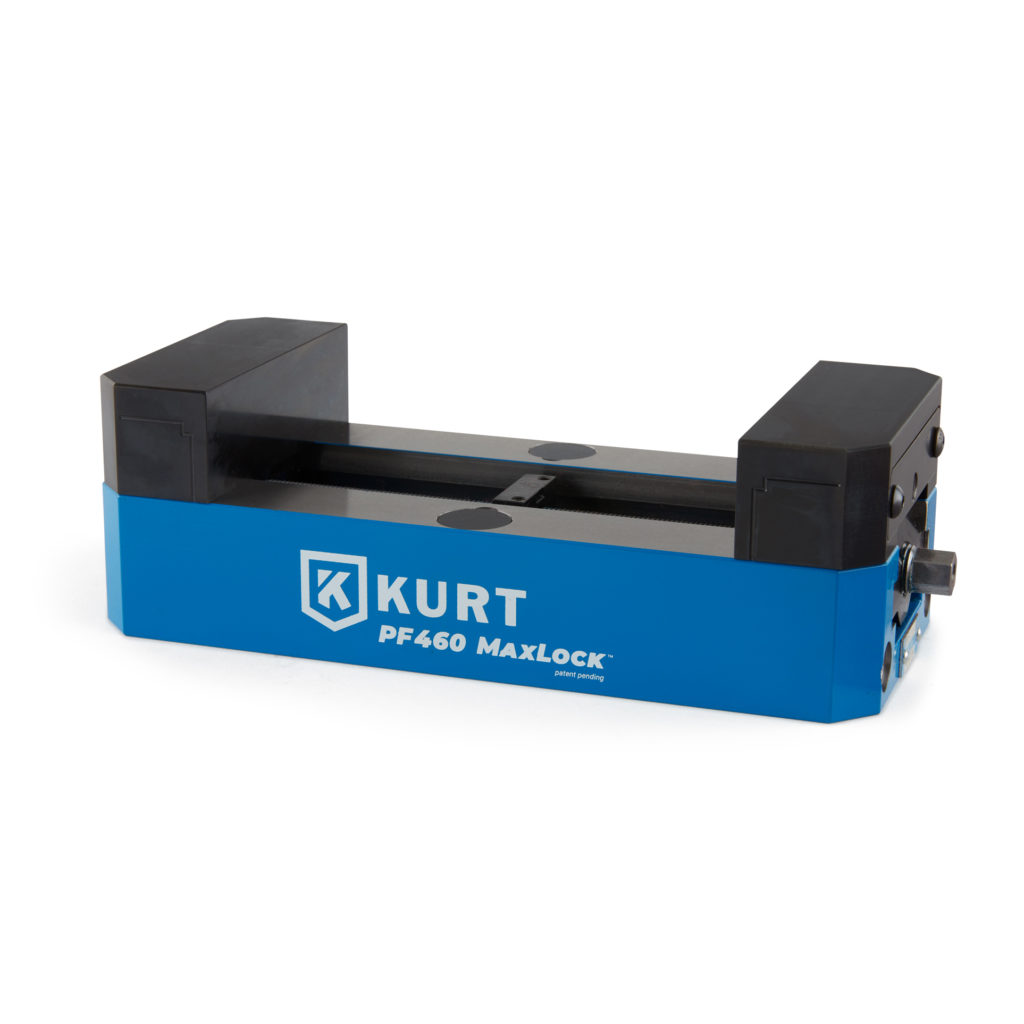
The PF420, PF440, and PF460 vise models feature a smaller footprint than the PFW wide base models. These models are also available in 3 sizes with snap on/off quick change 4-inch jaws. Compact 52 mm pull-stud spacing and receiver bases under 5-inches wide make these models the perfect choice where clamping force, repeatability and high-density machining are most important.
Key benefits include:
- AngLock™ clamping system for increased holding force and reduced deflection
- Quick-lash adjustment for repeatable part positioning
- Multiple jaw options to support complex or delicate parts
- Optimized for small- to medium-size workpieces
This vise is commonly used in medical, electronics, and high-tolerance machining applications.
Choose a Kurt Tombstone for Vertical Applications
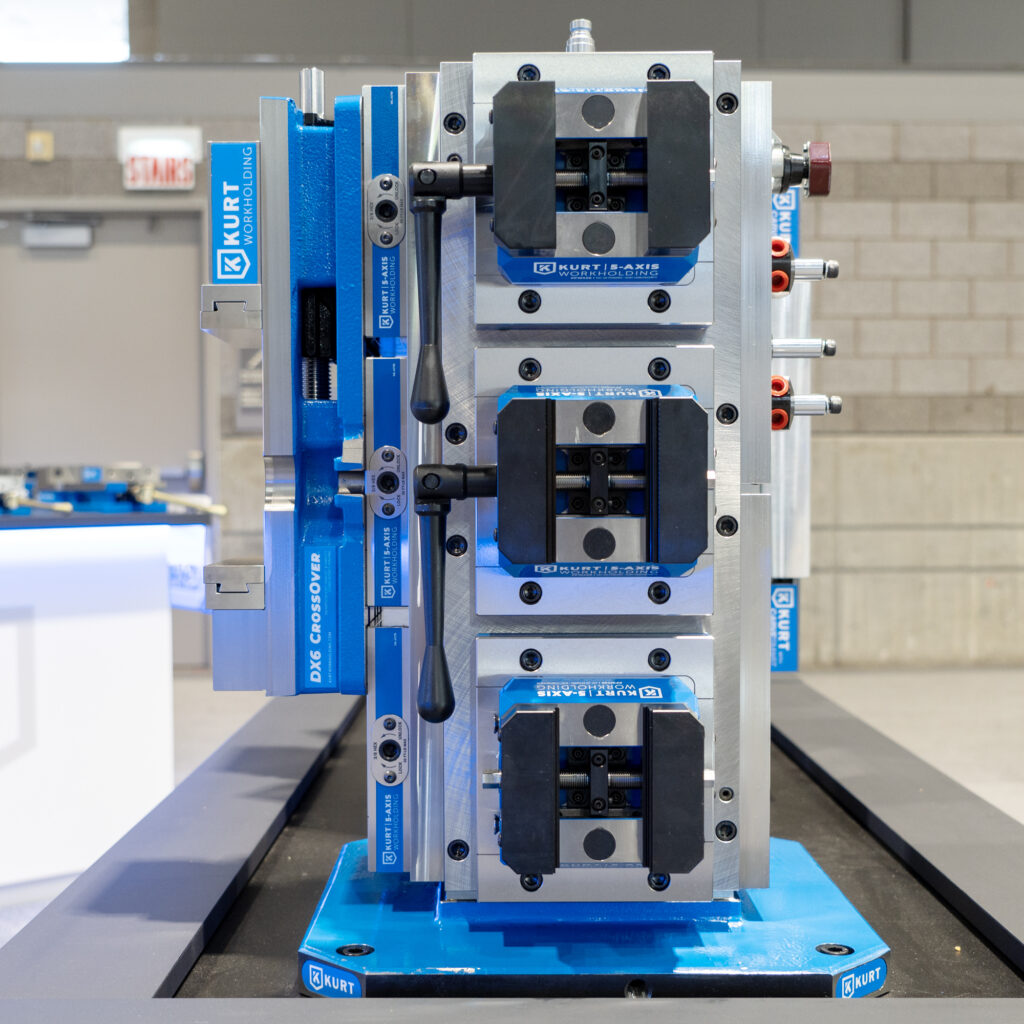
Kurt Caged Tombstones and Standard Tombstones can be covered with PFW420 vises is designed for demanding multi-axis machining applications where rigidity, accessibility, and repeatability are critical.
Key benefits include:
- Multi-Face Design: 2-, 4-face configurations for versatility.
- Quick-Change Integration: Bolt-on subplates enable rapid tooling changeovers, reducing downtime.
- Optimized for Automation: Air and hydraulic lines can be routed internally and integrate tombstones with automated workholding and robotic machine tending systems.
- Flexible in a variety of applications: From pallet pools and Palletech FMS lines, to 2-pallet changers.
3. Reduce Setup Time with Quick-Change Bases
A well-designed multi-axis vise setup should minimize machine downtime. Kurt’s quick-change bases allow operators to:
- Swap vises quickly using quick-change receiver bases
- Maintain repeatable positioning with multiple vises
- Standardize workholding across multiple CNC machines
- Modular and expandable system accommodates multiple vise models and brands
Using the 96-A178, 96-A178R100 bases with 96 mm pull-stud spacing, or the 52-A125 base with 52 mm pull-stud spacing enables faster transitions between part families while improving overall machine utilization.
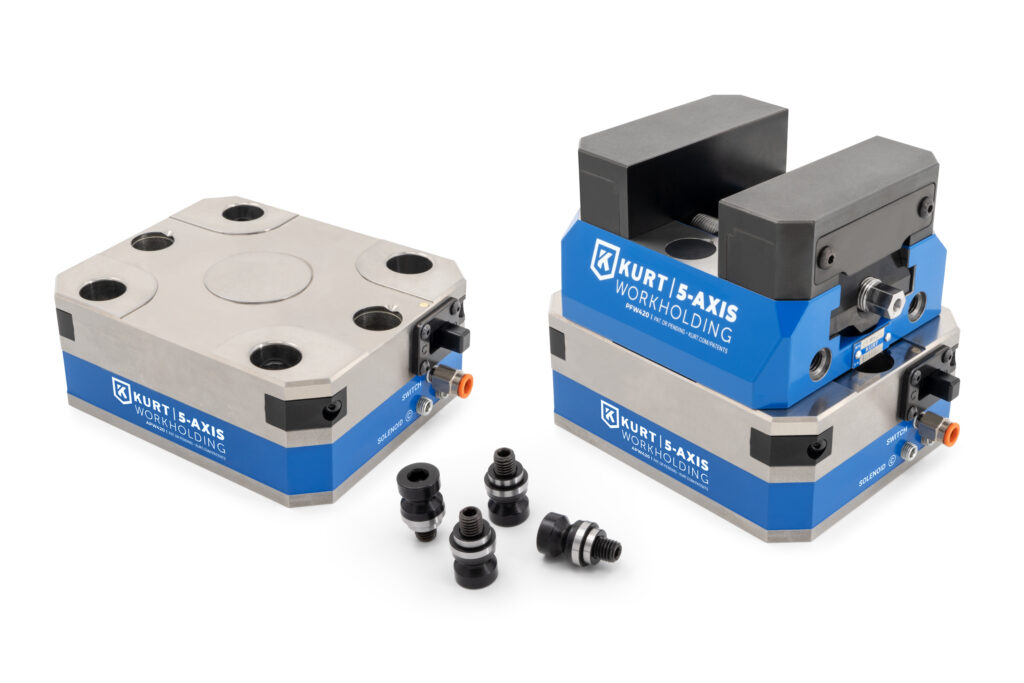
4. Plan for Modularity and Automation
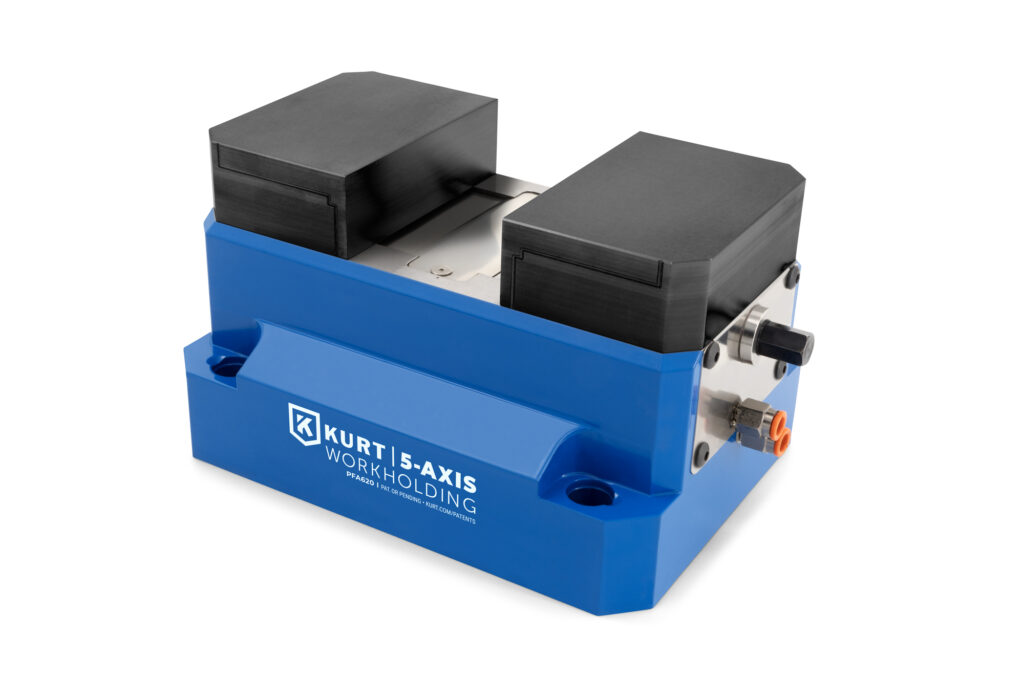
Multi-axis machining environments often evolve toward automation. Kurt offers to unique automation solutions for multi-axis machining. PFA620 Self-Centering Air Vises are designed to integrate seamlessly with robotic part loading and unloading, while APW420 Air Receiver Bases allow a robot to load and unload multiple manual vises from a drawer system or other vise racking system:
- Robotic loading and unloading systems
- Drawer and shelf systems in multiple-vise machining cells
- End-effector interfaces for unattended machining
By choosing a modular vise setup early, shops can scale production without redesigning their workholding strategy. Modular systems enhance flexibility and allow many different vise options to to be combined and recombined in multiple configurations.
5. Align Vise Features with Machining Goals
When selecting a multi-axis vise setup, consider how the following factors impact performance:
- Part geometry: Dovetail and machinable jaws support complex shapes
- Accuracy requirements: Rigid clamping improves repeatability
- Production mix: Quick-change bases support high-mix, low-volume work
- Automation readiness: Compact vises improve robotic access
Matching vise features to your application ensures consistent results and long-term efficiency.
Summary: How to Choose the Right Multi-Axis Vise Setup
To select the right multi-axis vise setup:
- Confirm compatibility with your zero-point or fixturing system
- Choose the appropriate 5-axis vise for part size and tolerance requirements
- Use quick-change bases to reduce setup time
- Plan for modular expansion and automation
Kurt Workholding’s PFW Series, PF420 Series, and quick-change base solutions provide a flexible, precision-driven foundation for modern multi-axis machining.
When looking for a fully automated workholding setup with a compact footprint, Kurt PFA620 air vises and APW420 Air Receiver Bases are excellent options. Both products offer an affordable, shop-air powered workholding solution where robotic machine tending is needed.